


How to Bond Liquid Crystal Polymer (LCP Plastic)
How to bond Liquid Crystal Polymer (LCP Plastic)
Liquid Crystal Polymer (LCP) is a type of advanced thermoplastic polymer with unique properties.
Liquid crystalline polymers (LCP), correctly called hel-aromatic copolyesters, can be based on terephthalic acid, p,p-dihydroxybiphenyl, and p-hydroxybenzoic acid. These compounds react to form tightly packed, rigid polymer chains composed of long, flat monomer units. LCP’s resistance to weather, radiation, combustion, and nearly all chemicals, as well as its excellent strength at extreme temperatures, makes it a suitable alternative to most other engineering materials, including metals and ceramics.
LCP has exceptional mechanical properties at both ambient and extreme temperatures. It resists almost all chemicals, including acids, organic hydrocarbons, and boiling water. It is also unaffected by ionizing radiation, tolerates high levels of UV radiation, and is transparent to microwaves.
Typical uses of LCP include electrical stator insulation, rotors, and motor boards. It is also used for fuse contacts and interface connections in electronic applications. Additionally, LCP is used in heavy industry. LCP is suitable for these applications due to its high strength, thermal stability, and chemical resistance. The estimated surface tension of liquid crystalline polymers (LCP) typically ranges from 30 to 40 dyn/cm.
LCP plastics are available under various trade names, including Granlar, HX Series, Vectra, and Xydar.
Bonding LCP
Thoroughly clean the surface to remove any contamination such as oils or greases. Use an appropriate cleaning method like a non-residue solvent. Applying a primer or pretreatment designed to increase surface tension and improve adhesive bonding to LCP can be beneficial.
Choose an adhesive specifically formulated to bond to LCP. Using a primer to improve the LCP surface is highly advantageous since it can be very smooth with low surface tension.
- The right epoxy adhesive has good adhesion and can be tailored to meet the high temperature and strength requirements often necessary when bonding LCP. Epoxy adhesives are a very reliable solution for bonding LCP, offering strong adhesion, temperature resistance, chemical resistance, and long service life. Both one-component and two-component epoxy adhesives may be used depending on the application.
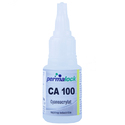
- A fast, efficient, and strong bond can also be achieved with the right cyanoacrylate (instant glue). This adhesive is easy to apply and cures quickly.
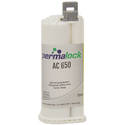
A specially formulated adhesive for LCP’s complicated surface is Permalock AC 650. This is a two-component adhesive specially developed for materials with low surface tension.
Allow the LCP adhesive to cure completely according to the manufacturer’s instructions. This step is crucial for achieving maximum bond strength and durability. After curing, a strength test should be performed to assess the adhesive’s durability and ensure it meets the requirements of your specific application.
LCP Manufacturers
LCP is available under various trade names representing different variants produced by leading manufacturers, including:
Granlar by Granmont Inc.
HX Series by E.I. DuPont
Vectra by Hoescht Celanese
Xydar by Amoco Performance Products
Contact us
Do you have questions about bonding or need advice on choosing the right adhesive for your application? Our experts are ready to help you achieve reliable and durable bonding.
We offer solutions with adhesive products that are tailored to meet your specific needs.
Contact us today for professional advice and support.
Call us at +45 66171802 to speak directly with one of our specialists, or send us an email at info@hojstrup.dk.
We ensure that you receive the best guidance and support for your bonding projects.